Luminal

UI UX Designer

·


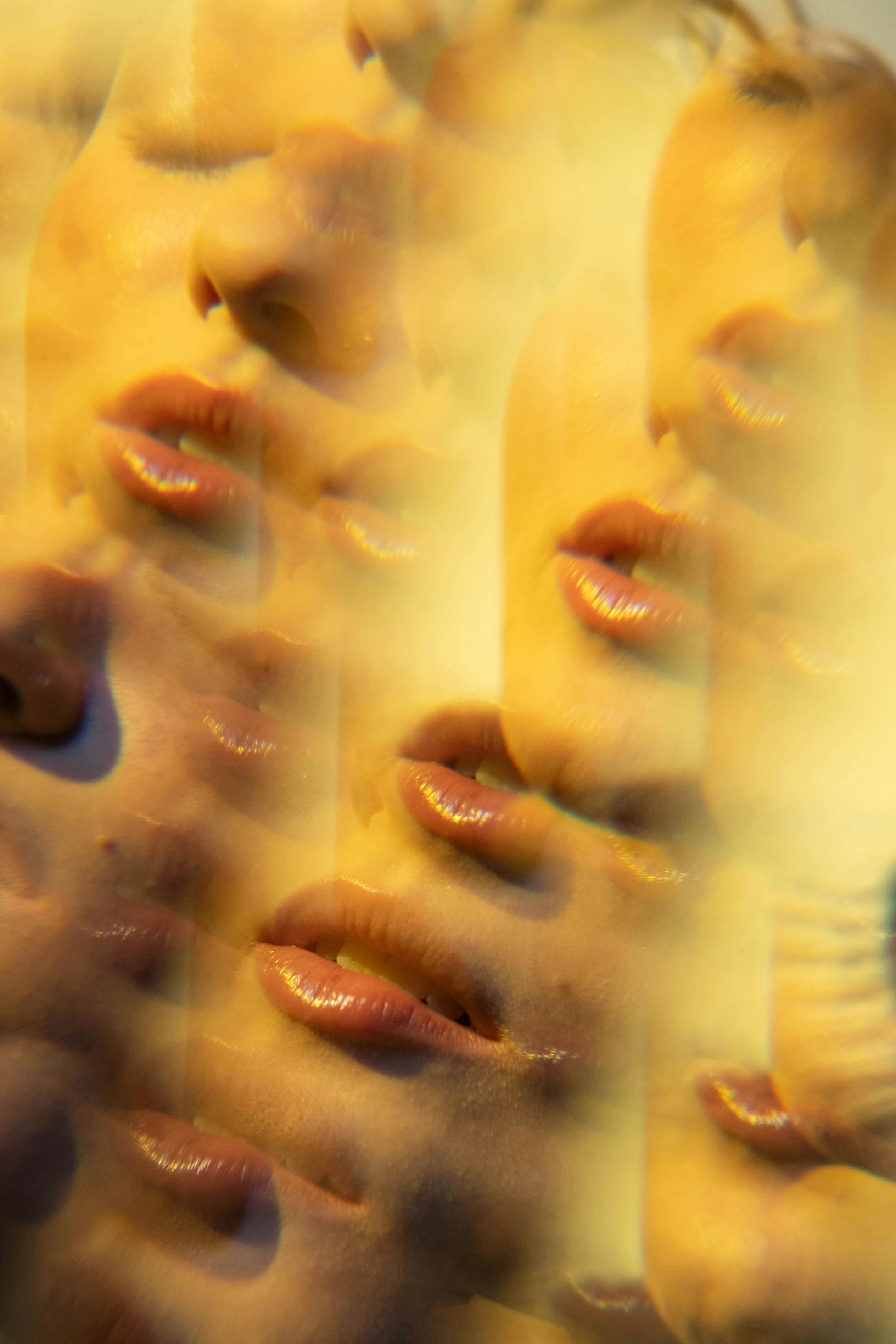
Multiple overlapping close-ups of a woman’s face and lips in warm yellow tones with a kaleidoscopic effect

Intro

We’re always looking—but what if the image is looking back? In our era of endless screens and self-documentation, visual culture isn’t just seen—it’s recursive. Mirrors, screenshots, video feedback, and visual loops have become aesthetic tools and conceptual critiques. This piece explores how artists are folding vision back on itself, creating images that reflect not reality, but the act of seeing itself.

The aesthetics of reflection


Mirrors have always haunted art. From Velázquez’s “Las Meninas” to Maya Deren’s surrealist films, reflection asks: who’s watching who? Today’s visual artists use this not just for symbolism, but structure. In installations by Haruka Ito or Eva Uba, mirrors aren’t props—they’re the medium. Rooms that reflect endlessly become spaces of infinite self-reference. Viewers become part of the work, whether they want to or not.


It’s not narcissism—it’s architecture.


Video feedback as critique


Analog video feedback—looping a camera through a monitor—was once a technical quirk. Now it’s a tactic. Artists like Ryan Trecartin and collectives like Soft Core Logic are turning feedback loops into psychedelic critique. The image eats itself. Faces smear. Voices echo. Identity becomes a glitch.


These loops destabilize authorship. Who made the image? Where does it start—or end?


Screens within screens


The visual loop is now digital-native. Think TikToks of people reacting to themselves, or livestreams watching livestreams. In apps like BeReal and Threads, the user becomes both performer and audience in real-time.


Artists like Camille Knapp are using this to expose the absurdity: creating browser-based video works where viewers are recorded watching themselves watching the work. Surveillance turns surreal.


Mirrors as memory


Beyond critique, mirrors offer melancholy. They hold past versions of ourselves. Films like “Aftersun” and “The Double Life of Véronique” use reflection as metaphor for loss, for parallel selves that never align. In visual essays and digital zines, creators are collaging mirror imagery with fragments of chatlogs and screenshots—making diaries that reflect back fragments of identity, not cohesive portraits.


Final thoughts


In a culture oversaturated with images, the loop becomes both prison and poetry. By folding visuals in on themselves, artists and filmmakers are building spaces of reflection—literally and metaphorically. These works don’t just ask you to look. They ask you to witness yourself witnessing.

Luminal

UI UX Designer

·


Multiple overlapping close-ups of a woman’s face and lips in warm yellow tones with a kaleidoscopic effect

Intro

We’re always looking—but what if the image is looking back? In our era of endless screens and self-documentation, visual culture isn’t just seen—it’s recursive. Mirrors, screenshots, video feedback, and visual loops have become aesthetic tools and conceptual critiques. This piece explores how artists are folding vision back on itself, creating images that reflect not reality, but the act of seeing itself.

The aesthetics of reflection


Mirrors have always haunted art. From Velázquez’s “Las Meninas” to Maya Deren’s surrealist films, reflection asks: who’s watching who? Today’s visual artists use this not just for symbolism, but structure. In installations by Haruka Ito or Eva Uba, mirrors aren’t props—they’re the medium. Rooms that reflect endlessly become spaces of infinite self-reference. Viewers become part of the work, whether they want to or not.


It’s not narcissism—it’s architecture.


Video feedback as critique


Analog video feedback—looping a camera through a monitor—was once a technical quirk. Now it’s a tactic. Artists like Ryan Trecartin and collectives like Soft Core Logic are turning feedback loops into psychedelic critique. The image eats itself. Faces smear. Voices echo. Identity becomes a glitch.


These loops destabilize authorship. Who made the image? Where does it start—or end?


Screens within screens


The visual loop is now digital-native. Think TikToks of people reacting to themselves, or livestreams watching livestreams. In apps like BeReal and Threads, the user becomes both performer and audience in real-time.


Artists like Camille Knapp are using this to expose the absurdity: creating browser-based video works where viewers are recorded watching themselves watching the work. Surveillance turns surreal.


Mirrors as memory


Beyond critique, mirrors offer melancholy. They hold past versions of ourselves. Films like “Aftersun” and “The Double Life of Véronique” use reflection as metaphor for loss, for parallel selves that never align. In visual essays and digital zines, creators are collaging mirror imagery with fragments of chatlogs and screenshots—making diaries that reflect back fragments of identity, not cohesive portraits.


Final thoughts


In a culture oversaturated with images, the loop becomes both prison and poetry. By folding visuals in on themselves, artists and filmmakers are building spaces of reflection—literally and metaphorically. These works don’t just ask you to look. They ask you to witness yourself witnessing.

Luminal

UI UX Designer

·


Multiple overlapping close-ups of a woman’s face and lips in warm yellow tones with a kaleidoscopic effect

Intro

We’re always looking—but what if the image is looking back? In our era of endless screens and self-documentation, visual culture isn’t just seen—it’s recursive. Mirrors, screenshots, video feedback, and visual loops have become aesthetic tools and conceptual critiques. This piece explores how artists are folding vision back on itself, creating images that reflect not reality, but the act of seeing itself.

The aesthetics of reflection


Mirrors have always haunted art. From Velázquez’s “Las Meninas” to Maya Deren’s surrealist films, reflection asks: who’s watching who? Today’s visual artists use this not just for symbolism, but structure. In installations by Haruka Ito or Eva Uba, mirrors aren’t props—they’re the medium. Rooms that reflect endlessly become spaces of infinite self-reference. Viewers become part of the work, whether they want to or not.


It’s not narcissism—it’s architecture.


Video feedback as critique


Analog video feedback—looping a camera through a monitor—was once a technical quirk. Now it’s a tactic. Artists like Ryan Trecartin and collectives like Soft Core Logic are turning feedback loops into psychedelic critique. The image eats itself. Faces smear. Voices echo. Identity becomes a glitch.


These loops destabilize authorship. Who made the image? Where does it start—or end?


Screens within screens


The visual loop is now digital-native. Think TikToks of people reacting to themselves, or livestreams watching livestreams. In apps like BeReal and Threads, the user becomes both performer and audience in real-time.


Artists like Camille Knapp are using this to expose the absurdity: creating browser-based video works where viewers are recorded watching themselves watching the work. Surveillance turns surreal.


Mirrors as memory


Beyond critique, mirrors offer melancholy. They hold past versions of ourselves. Films like “Aftersun” and “The Double Life of Véronique” use reflection as metaphor for loss, for parallel selves that never align. In visual essays and digital zines, creators are collaging mirror imagery with fragments of chatlogs and screenshots—making diaries that reflect back fragments of identity, not cohesive portraits.


Final thoughts


In a culture oversaturated with images, the loop becomes both prison and poetry. By folding visuals in on themselves, artists and filmmakers are building spaces of reflection—literally and metaphorically. These works don’t just ask you to look. They ask you to witness yourself witnessing.